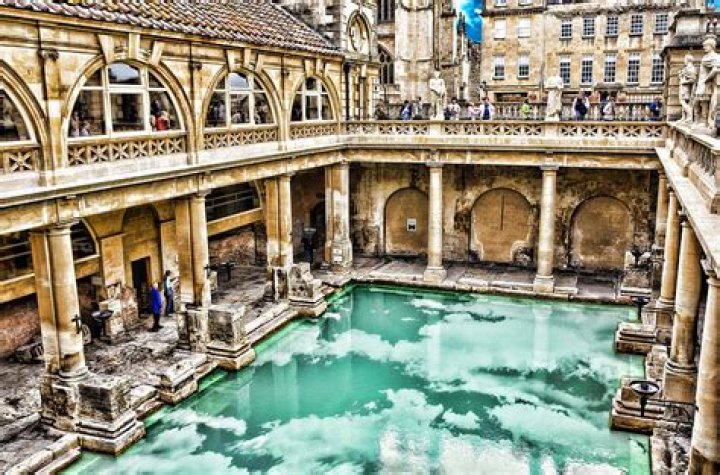
When did baths become common?
Large public baths such as those found in the ancient world and the Ottoman Empire were revived during the 19th century. The first modern public baths were opened in Liverpool in 1829. The first known warm fresh-water public wash house was opened in May 1842.
What were medieval baths called?
Public steam baths known as ‘stews’ were popular as a social meeting place in medieval England, after ‘stewhouses’ (more formally known as ‘bagnios’) were first established on the south bank of the River Thames in the mid-late 12th century. Mixed-sex bathing was commonplace at them.
How did medieval baths work?
Those who could afford a personal bath would use a wooden tub that was filled using jugs of hot water brought by attendants. This included washing ones face and hands, as well as brushing one’s hair, and keeping teeth “picked, cleansed, and brushed.” The church did not approve of “excessive” bathing, however.
Did they bathe in the Regency era?
Readers familiar with the Regency era know that attitudes towards bathing and hygiene were on the cusp of change. In the early 18th century, a person might wash their face and hands daily, but at the most they would bathe every few weeks or months. Others began to associate bathing with good health.
How did pioneers wash themselves?
In the summer, pioneers may rinse off in the creek or river prior to bath day. With pioneers sometimes having as little furniture as one chair and one table, it would seem like housecleaning would be a breeze! However, there were no vacuum cleaners and they made their own brooms to combat the constant dust.
How dirty was medieval England?
They were ankle-deep in a putrid mix of wet mud, rotten fish, garbage, entrails, and animal dung. People dumped their own buckets of faeces and urine into the street or simply sloshed it out the window.
When did people take their yearly Bath in the 1500s?
Like I said, they took their yearly bath in May, but it was just a big tub that they would fill with hot water. The man of the house would get the privilege of the nice clean water.
What was the bathtub like in the 17th century?
By the 17th century, when Europeans began settling in North America in large numbers, the bathtub for your average home was a portable tub made of wood, lined with steel. It was brought out before the fire and hearth, and filled with heated water. The whole family would take turns bathing in the same water, which would only then be dumped.
Where was the first toilet and bathtub found?
Ceramic bathtubs and plumbing had been introduced to Greek islands by 1700 BCE, with alabaster tubs and separate hot and cold water supplies found from 1500 BCE. Squat toilets were found in Asia from at least 1500 BCE.
What kind of bathtub was used in 1909?
The Mosely Folding Bath Tub pulled down like a Murphy bed. However, for decades, the bathtub most Americans knew best was the one available in a 1909 hardware catalog: a tinware plunge bath with wood-covered bottom painted in Japan green (a type of pre-1940 enamel paint).
Like I said, they took their yearly bath in May, but it was just a big tub that they would fill with hot water. The man of the house would get the privilege of the nice clean water.
Ceramic bathtubs and plumbing had been introduced to Greek islands by 1700 BCE, with alabaster tubs and separate hot and cold water supplies found from 1500 BCE. Squat toilets were found in Asia from at least 1500 BCE.
By the 17th century, when Europeans began settling in North America in large numbers, the bathtub for your average home was a portable tub made of wood, lined with steel. It was brought out before the fire and hearth, and filled with heated water. The whole family would take turns bathing in the same water, which would only then be dumped.
When did they start putting in bathtubs in homes?
The end of World War I brought with it a construction boom in the US. Bathrooms were fitted with a toilet, sink, and bathtub – mostly clawfoot bathtubs. But even in 1921, only one percent of homes in the US had indoor plumbing.
